
You are currently browsing the tag archive for the ‘Science’ tag.
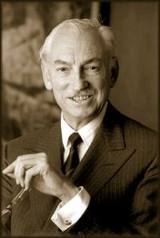 No resulta muy conocida la ejemplar trayectoria profesional de Alejandro Zaffaroni, un uruguayo de pro, -hijo de españoles e italianos- aunque gran parte de su trabajo lo desarrollara en los Estados Unidos y definido como emprendedor en serie: más de una docena de empresas! De la fascinante vida de este casi nonagenario (88) podemos sacar algunas lecciones que ojala pudieran aplicarse en España.
El Dr. Zaffaroni nació en Montevideo en 1923 y en esa ciudad estudió Medicina, que completó con una beca Fullbright en EEUU. Su primer destino era Harvard, pero como quiera que ya mostrara espíritu inquieto y le pareció que se le imponía rigidez y restaba posibilidades, se trasladó a la algo menos prestigiosa Rochester, donde se doctoró en Endocrinología. El fiable mecanismo de nuestras hormonas para liberar sus moléculas a intervalos regulares le inspiró para su primer trabajo, en México DF en 1961 trabajando para el laboratorio Syntex, donde escaló posiciones combinando su faceta de científico con la de emprendedor para las aplicaciones innovadoras que iba descubriendo. Aquella experiencia con hormonas le sirvió para crear un nuevo campo: la liberación controlada por drug delivery y de paso, desarrollar la primera píldora anticonceptiva que se comercializó.
Trasladado Syntex a Palo Alto, en California, en 1968 no había muchos laboratorios farmacéuticos que creyeran en el potencial de la liberación controlada de fármacos, por lo que fundó una compañía con su nombre: ALZA, que por primera vez ponía juntos a trabajar a biólogos y a ingenieros, desarrollando el concepto de drug delivery hasta convertirlo en un motor generador de montones de patentes. Tras alcanzar enormes hitos como un tratamiento para el glaucoma, parches transdérmicos, cápsulas de liberación retardada o mini-bombas implantables, ALZA fue comprada 30 años después por el grupo J&J en 2001 por más de 10bn de dólares. En el camino, cuando ALZA estaba encarrilada, en 1980 fundó DNAX, donde de nuevo combinó la ingeniería genética con la inmunología para trabajar con macromoléculas, y que sería comprada por Schering-Plough en 1982.
Affymax la fundó en 1989 para revolucionar el concepto de química combinatoria, sentando juntos a expertos en bioquímica y en microchips, y posibilitando que se investigaran en proceso paralelo decenas de miles de compuestos en una fracción del tiempo que antes se empleaba para testar una docena. De nuevo, Affymax fue vendida en 1995 a Glaxo, aunque mientras había originado tres nuevas start-ups: Affymetrix especializada en microarrays, Maxygen y Symyx, en las que investigadores de Affymax habían llegado a proyectos que no encontraban acomodo dentro de sus objetivos fundacionales. En los tres casos, Zaffaroni ayudó a estos equipos a montar las nuevas empresas, les apoyó con financiación y con su valiosa red de contactos y defendió su independencia en los primeros tiempos.
Zaffaroni se retiró a finales de 1997 de sus puestos en ALZA y Affymetrix, para dedicar más tiempo (a los 74 años!) a la Fundación Zaffaroni, que fundó en 1963 para investigar el papel de la educación, nutrición y genética en el desarrollo de la depresión y los trastornos adictivos. Entre otras distinciones, en 1995 el presidente Clinton le impuso la medalla Nacional de Tecnología, el mayor reconocimiento científico en ese país.
Lecciones a extraer de la exitosa carrera de emprendedor en serie de Alex Zaffaroni* : 1) innovación: tuvo claro eso de que si circulas por caminos ya transitados, nunca llegarás a un nuevo destino. Además fue pionero en trabajar sobre plataformas de tecnologías o moléculas, evitando la apuesta por un único producto. 2) independencia: si crees en una idea, haz todo lo posible por no depender de otros. Esto lo aprendió en una empresa fallida: Dynapol en 1972, a la que le falló la financiación externa. 3) humildad: habiendo experimentado el éxito tantas veces, siempre se rodeaba de científicos más jóvenes y de disciplinas aparentemente distantes, pero de los que podía aprenderse algo nuevo. 4) creación, liderazgo y motivación de equipos.
* Vivió en la zona de la bahía de San Francisco y falleció en marzo de 2014.
 Following from my recent post Recruitment differences in Health and Science last week I was invited to talk in Barcelona at the Personal España fair and exhibition about the differences that specialist recruiters have compared to generalists.
Basically I can identify three characteristics: consultants must have previous experience in the field, they understand and speak the language of clients and candidates and they also keep updated on the latest developments in the various segments of the industry. In short, both parts perceive that the consultant is “one of them”. This is not unique to Life Sciences; it happens the same with Finance, IT, etc.
In parallel, I was preparing a .ppt (with the help of Javier de Inocencio) presentation for the Life Sciences practice of my network Penrhyn International and had to summarize the advantages of these characteristics: Penrhyn-life-sciences-practice-presentation
1) A specialist recruiter can enrich the briefing with the client and even offer some benchmarking from the very beginning of the search.
2) Knows what target-companies to approach and whose not: it is more efficient. Complementary to this, can identify “lateral candidates”, the non obvious, sometimes temporarily in Consultancy, Services, another country, another function, etc.
3) Gets spontaneous referencing that is extremely valuable along the project.
4) Can focus the personal interviews on real key issues, avoiding generalizations and clichés.
5) When the practice consultants have complementary backgrounds and are based in different locations, they can also offer a true “global view” of the sector.
 What makes Biosciences executives different from other economy segments? It is commonly argued that it is a different industry with a certain endogamy seen in their companies and some functions. Apart from the unpredictability associated with basic research, a basic difference is that Biosciences project a global approach from the very moment that a molecule is identified. Here are three others:
* Permanent Innovation. With a clear science-and-research culture, innovation is embedding in this sector DNA. The most successful corporations are the ones with a clear commitment to R&D. An average R&D investment of 15%, that may go as high as 20% is difficult to beat for most industries, except sometimes IT or Telecom. Successful executives must get used to project management and drug development in many innovative disciplines such as Molecular Biology, Genetics, Nanotechnology, Proteomics, etc. Any professional headhunter knows that Biosciences CEO’s and VP’s must not be sought from mature or “comfortable” sectors .
* Regulatory Affairs. A challenge for executives coming from other sectors is market access. Price is not free in most countries, packaging cannot be changed without notifying the health authorities, distribution channels are well established with the role of Hospitals and Pharmacies also regulated. Moreover, promotional claims or DTC advertising must pass previous approval in almost every country, particularly for reimbursed products. Business Development deals require a quick adapting to new segments with a strong focus on health economics, outcomes and reimbursement.
* The role of prescription. When the ultimate customer, the patient, is often remote and not in direct contact with the innovator, a pharmaceutical o biomedical product requires the professional advice of a prescriber. This works in cascades: international opinion leaders(OL’s), national OL’s and local OL’s. Nowadays, specialists -in a clear shift from primary care- again prescribe the most innovative and attractive products. And the number of stakeholders has grown in recent times, including now clinical boards assessing new drugs, patients associations, medical societies and -in countries like Spain- autonomous communities authorities, etc.
The advent of personalized medicine will mean more specialist drugs for smaller groups of patients and a shift back to science vs. marketing, -that was so effective in the me-too and blockbuster era-. Executives used to work with that type of products need to reset to the new targeted-only business model and the recruiters involved in these types of searches must have the “helicopter view” necessary to differentiate segments and cultures, on top of speaking the language of the industry.
 Healthy Resources