
You are currently browsing the category archive for the ‘Science’ category.
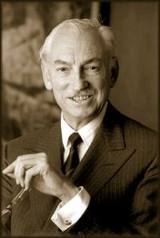 No resulta muy conocida la ejemplar trayectoria profesional de Alejandro Zaffaroni, un uruguayo de pro, -hijo de españoles e italianos- aunque gran parte de su trabajo lo desarrollara en los Estados Unidos y definido como emprendedor en serie: más de una docena de empresas! De la fascinante vida de este casi nonagenario (88) podemos sacar algunas lecciones que ojala pudieran aplicarse en España.
El Dr. Zaffaroni nació en Montevideo en 1923 y en esa ciudad estudió Medicina, que completó con una beca Fullbright en EEUU. Su primer destino era Harvard, pero como quiera que ya mostrara espíritu inquieto y le pareció que se le imponía rigidez y restaba posibilidades, se trasladó a la algo menos prestigiosa Rochester, donde se doctoró en Endocrinología. El fiable mecanismo de nuestras hormonas para liberar sus moléculas a intervalos regulares le inspiró para su primer trabajo, en México DF en 1961 trabajando para el laboratorio Syntex, donde escaló posiciones combinando su faceta de científico con la de emprendedor para las aplicaciones innovadoras que iba descubriendo. Aquella experiencia con hormonas le sirvió para crear un nuevo campo: la liberación controlada por drug delivery y de paso, desarrollar la primera píldora anticonceptiva que se comercializó.
Trasladado Syntex a Palo Alto, en California, en 1968 no había muchos laboratorios farmacéuticos que creyeran en el potencial de la liberación controlada de fármacos, por lo que fundó una compañía con su nombre: ALZA, que por primera vez ponía juntos a trabajar a biólogos y a ingenieros, desarrollando el concepto de drug delivery hasta convertirlo en un motor generador de montones de patentes. Tras alcanzar enormes hitos como un tratamiento para el glaucoma, parches transdérmicos, cápsulas de liberación retardada o mini-bombas implantables, ALZA fue comprada 30 años después por el grupo J&J en 2001 por más de 10bn de dólares. En el camino, cuando ALZA estaba encarrilada, en 1980 fundó DNAX, donde de nuevo combinó la ingeniería genética con la inmunología para trabajar con macromoléculas, y que sería comprada por Schering-Plough en 1982.
Affymax la fundó en 1989 para revolucionar el concepto de química combinatoria, sentando juntos a expertos en bioquímica y en microchips, y posibilitando que se investigaran en proceso paralelo decenas de miles de compuestos en una fracción del tiempo que antes se empleaba para testar una docena. De nuevo, Affymax fue vendida en 1995 a Glaxo, aunque mientras había originado tres nuevas start-ups: Affymetrix especializada en microarrays, Maxygen y Symyx, en las que investigadores de Affymax habían llegado a proyectos que no encontraban acomodo dentro de sus objetivos fundacionales. En los tres casos, Zaffaroni ayudó a estos equipos a montar las nuevas empresas, les apoyó con financiación y con su valiosa red de contactos y defendió su independencia en los primeros tiempos.
Zaffaroni se retiró a finales de 1997 de sus puestos en ALZA y Affymetrix, para dedicar más tiempo (a los 74 años!) a la Fundación Zaffaroni, que fundó en 1963 para investigar el papel de la educación, nutrición y genética en el desarrollo de la depresión y los trastornos adictivos. Entre otras distinciones, en 1995 el presidente Clinton le impuso la medalla Nacional de Tecnología, el mayor reconocimiento científico en ese país.
Lecciones a extraer de la exitosa carrera de emprendedor en serie de Alex Zaffaroni* : 1) innovación: tuvo claro eso de que si circulas por caminos ya transitados, nunca llegarás a un nuevo destino. Además fue pionero en trabajar sobre plataformas de tecnologías o moléculas, evitando la apuesta por un único producto. 2) independencia: si crees en una idea, haz todo lo posible por no depender de otros. Esto lo aprendió en una empresa fallida: Dynapol en 1972, a la que le falló la financiación externa. 3) humildad: habiendo experimentado el éxito tantas veces, siempre se rodeaba de científicos más jóvenes y de disciplinas aparentemente distantes, pero de los que podía aprenderse algo nuevo. 4) creación, liderazgo y motivación de equipos.
* Vivió en la zona de la bahía de San Francisco y falleció en marzo de 2014.
 A partir del recién aparecido ranking de la revista Fortune sobre los 100 Best places to work en los Estados Unidos, he querido hacer una revisión de cuántos de ellos pertenecen al sector de la Salud, así como de su posible correlación con la situación en España. Hace años que se elabora este ranking por el Great Place to Work Institute contando con varios inputs, como la credibilidad del equipo directivo, la satisfacción en el trabajo y la camaradería. Creo que ofrece algunas reflexiones y lecciones.
La primera compañía del sector que aparece en el puesto 27 es CHG Healthcare Services, una ETT de médicos, enfermeras y personal sanitario con base en Salt Lake City…una ETT choca en España, verdad? En el 31 encontramos a W.L.Gore que tiene una división de dispositivos médicos presente también en España, aunque nos resulta más conocida por su tejido impermeable Gore-tex. Genentech, la biotecnológica propiedad del grupo Roche aparece en el puesto 35 y lo hace por decimotercer año consecutivo, todo un hito para la pionera de San Francisco.
Otra lección y sorpresa en el puesto 37 con el prestigioso Centro de Investigación Scripps de San Diego, donde la formación se considera tan importante que todos los empleados, incluso los recién llegados participan al menos en un programa de desarrollo al año. El presupuesto anual para formación de esta not-profit es de 30 millones de USD! El laboratorio danés Novo Nordisk aparece en el puesto 47 y se destaca que ofrece a sus empleados tratamientos de fertilidad y permisos para adopción.
Ya en el 56 aparece otra biotecnológica Millenium, que pertenece a la japonesa Takeda, presente en España. La famosa Clínica Mayo está en el 61 y el fabricante de equipos médicos Stryker se estrena este año en el 68. Otros hospitales y mutuas puramente americanos completan la perspectiva del sector.
Algunas compañías como Roche y Novo Nordisk repiten presencia en el ranking de España pero la competencia en EEUU es dura y compañías que destacan en España como Abbott, Quintiles, Novartis, Lilly o Medtronic no consiguen alcanzar el top-100 de aquel ranking.
¿Porqué éste no es un ranking más? Pues porque hablamos de empleo muy cualificado en el sector de la salud. A raíz de los nuevos acuerdos sobre pensiones futuras en España, para cotizar 38,5 años, hay que empezar a trabajar a los 28. La reflexión es: los médicos que hagan MIR y los Licenciados que hagan doctorados, ¿cómo van a poder completar los 38,5 años? ¿O han de renunciar a tener una pensión pública completa? ¿O ya desde su juventud sabrán que no alcanzarán el 100%? Confío en que esta información sirva de orientación sobre en qué compañías intentar pasar esos 38 años y medio.
 For me, talking about Euromedica is talking about a story of professional success in specialized recruitment.
I had the privilege to found Euromedica Spain in June 1992. The founder of the group John Fulford has to be recognized for the vision in putting together a group of British, a Belgian, a German and a French, Francis Rolland, who also deserves my personal gratitude for his support. John had had a previous experience in retained executive search with a generalist group and he could envisage the winning formula of building a very international team with experience in different segments of the Life Sciences field. As he used to say, we were “speaking the language of our clients”.
My experience was contributing from a background in OTC, branded Pharmaceuticals and API’s, but the partners based in the UK and Continental countries had also backgrounds in Medical Devices, Diagnostics and service companies. In the late 80’s and early 90’s specialized recruitment was a pioneer approach and clients immediately loved it. I still remember presentations and sales pitches to clients in many European cities and the result was extremely positive. Many of those clients are still trusting us their senior search needs 20 years later.
I learned the profession with Euromedica and I learned it very well. The process, methodology and working ethics were those of the AESC and that is a guarantee of even higher standards today. That is why renewing our association and strengthening our affiliation is very good news for Spanish and European biosciences clients at large. We have recently agreed that myself and the company I work for, EuroGalenus will work as the Spanish Associate office of the Euromedica group. Along these years we have lived together market changes and different ownership situations, but the current team continues to be an outstanding group of international professionals serving Life Sciences companies all over the world. …we even maintain the original Euromedica Madrid telephone number: +34 91 350 5556.
 When examining the reasons for success or failure within Biotechnology initiatives (start-ups), different cases often lead to identifying the responsibilities of management, or lack there of. In many cases, there is a clear conflict between the initial informal style that encourages scientific creativity and the discipline required of a private company. These general features are given within Biotech companies in Spain and are virtually replicated in many other countries across Europe.
The development of biotechnology companies has been compared to the ages of man: childhood, adolescence, youth and adulthood. The requirements of managerial skills in these stages differ; development and growth should be optimized. The executives who adapt to these very diverse periods and requirements are considered exceptional professionals.
Entrepreneur skills often clash with management competences. For an entrepreneur, uncertainty and ambiguity are part of the setting: a comfortable environment; much unlike the orthodox management skills. In order to achieve international dimension, smaller Biotech companies have had to incorporate a professional and diverse board with VP’s having one mission: guaranteeing the present and planning for the future.
Leadership and motivation are crucial foundations. In this competitive marketplace, potential investors seek these skills when searching for Biotech directors or CXO’s. Directors must have clear, long-term objectives as well as the ability to solve problems that arise and not be discouraged with setbacks. When starting a biotechnology company the CEO has to assume responsibility of all different types of problems including intellectual property, financing, R&D delays, Business Development, HR and industrial relations … maybe even the office lease. The CEO must act as an achiever or a doer in all areas which will lead to success.
Communication skills are essential regarding all aspects of the company. The combination of external and internal communication helps to align all departments.
Adapting to change is a necessity. The long-term vision of the company remains in the background as a reference point for a myriad of decisions and actions in the short-term. Even with a clear and positive vision of the future, there must be survival tactics for the company.
Initiative is vital. The relationship with the board of an emerging company is different from that of a large corporation. In a start-up, managers are expected to come with contingency plans to discuss and eventually approve. Diverse investors may have different priorities and represent different expectations of the business, complicating the situation.
The ability to Build Teams, while keeping them aligned and motivated requires tons of emotional intelligence! A start-up company will begin small, however if it is effective and efficient it can succeed in gaining dimension.
As a continuation of my post last June, a complement to understand the distribution and function segments of the Spanish employment in the health sector we are going to use different data. Data from the past 15 years of our executive search professional experience in EuroGalenus, in recruiting senior executives for our clients.
| Pharmaceutical companies |
41% |
| Hospital products and devices |
20% |
| OTC/EFP |
12% |
| Biotech/Diagnostics |
14% |
| Services |
13% |
The positions of General Manager and similar in Spain represent a 11% of the total and point two tendencies: an increase of territorial responsibility, including Portugal or other countries to become Iberia or South Europe. Another tendency is the reduction of competences of the Country Manager, losing areas like Manufacturing, R&D, Logistics or Clinical Research, with regional or HQ reporting or external outsourcing companies.
All the technical positions represent a third of the total and they are in clear ascent. Medical Affairs, Clinical Research, Market Access, Business Intelligence, Regulatory Affairs or Pharmacoeconomics are some frequent ones.
Another interesting information of this study is that, although the Pharmaceutical Industry is the biggest industrial employer, is not the only one. It has demanded a 41% of all the missions undertaken, complemented with another 12% of the segment without prescription: OTC/EFP, that includes Cosmetics, Nutrition, Toiletries and related.
Hospital Product companies and Medical Devices meant a 20% of the total in the period and those of Biotechnology/Diagnostics – in clear ascent a further 14%. Biotech and Diagnostics share some characteristics: high scientific contents, specialists target and Hospital or Lab environment. However, we must bear in mind that some Diagnostic products are not obtained through Biotechnology and also that many Biotechnology products are not designed for the Diagnostics market.
The current growth of the recruitment within the Health and Science Industries is taking place in the Services companies. Those that develop activities that the manufacturing companies used to perform previously in-house, like Marketing/Advertising, Market Research/Business Intelligence, PR/Communications, Editorial/CRM, Events, Human Resources and even Sales.
 A few days ago I attended the official presentation of Asebio‘s Annual report. Asebio is the Spanish Association of Biotechnology Industries and next year will be celebrating its 10th anniversary.
A long road has been completed from the early 90’s that I remember in the executive search profession. Then, the searches assigned to EuroGalenus were coming from foreign corporations just starting commercial operations in Spain. Usually Regional or Country Managers and their key board executives: CEO, CSO, Regulatory Affairs Director and/or Technical/responsible person. These executives were sourced from Pharmaceutical companies as the problems they were facing were very similar: approval, reimbursement, marketing, etc. Most of those companies are now big consolidated names in the world of international and Spanish Biotechnology.
In 1992, the Spanish sector consisted of Biokit (part of the Werfen/Izasa group), Pharmamar (part of Zeltia)…and not much more. So the development in 15/20 years is more stunning than just the past 10 years. Now, Spain has over 250 companies employing more than 100.000 people. Even more, we have successful companies ready to make the “big jump” and become truly global. To Pharmamar, we now have to add Advancell, Oryzon Genomics, Digna Biotech, Cellerix, Bionostra, Lipotec, 3P Bio or Palau Pharma, to mention a few. Spain now ranks 8-9th in the Biotechnology world league according to the latest OECD report.
These new companies face very different scenarios and needs than the pioneers : Discovery and Development senior scientists, Manufacturing and scale-up Directors, Intellectual property (IP) experts, Business Development Directors… Less than two years ago, one of the CEO’s in the industry, Ms. Cristina Garmendia of Genetrix was appointed Minister of Science and Innovation; unfortunately when the worst of the economic crisis was starting to hit traditional sectors such as construction, housing, tourism, etc. Not the ideal situation to fight for Biotechnology in front of the other Ministers in the councils.
However, my professional perspective is that the foundations of this sector in Spain are solid: the traditional high scientific level and creativity of our Research centres and Universities starts to find a new perception from venture capital and finance groups. The country government and regions are supporting the development of Biotech Parks and clusters, where Academia, Science, Business and Finance can work and grow together.
Next November 26th the Alumni of the IE Business school will celebrate an Open Forum in Madrid to discuss the current challenges of the sector in Spain, but the great appointment will be BioSpain next year 2010 at the end of September, with Pamplona as the city host.
 Following from my recent post Recruitment differences in Health and Science last week I was invited to talk in Barcelona at the Personal España fair and exhibition about the differences that specialist recruiters have compared to generalists.
Basically I can identify three characteristics: consultants must have previous experience in the field, they understand and speak the language of clients and candidates and they also keep updated on the latest developments in the various segments of the industry. In short, both parts perceive that the consultant is “one of them”. This is not unique to Life Sciences; it happens the same with Finance, IT, etc.
In parallel, I was preparing a .ppt (with the help of Javier de Inocencio) presentation for the Life Sciences practice of my network Penrhyn International and had to summarize the advantages of these characteristics: Penrhyn-life-sciences-practice-presentation
1) A specialist recruiter can enrich the briefing with the client and even offer some benchmarking from the very beginning of the search.
2) Knows what target-companies to approach and whose not: it is more efficient. Complementary to this, can identify “lateral candidates”, the non obvious, sometimes temporarily in Consultancy, Services, another country, another function, etc.
3) Gets spontaneous referencing that is extremely valuable along the project.
4) Can focus the personal interviews on real key issues, avoiding generalizations and clichés.
5) When the practice consultants have complementary backgrounds and are based in different locations, they can also offer a true “global view” of the sector.
 What makes Biosciences executives different from other economy segments? It is commonly argued that it is a different industry with a certain endogamy seen in their companies and some functions. Apart from the unpredictability associated with basic research, a basic difference is that Biosciences project a global approach from the very moment that a molecule is identified. Here are three others:
* Permanent Innovation. With a clear science-and-research culture, innovation is embedding in this sector DNA. The most successful corporations are the ones with a clear commitment to R&D. An average R&D investment of 15%, that may go as high as 20% is difficult to beat for most industries, except sometimes IT or Telecom. Successful executives must get used to project management and drug development in many innovative disciplines such as Molecular Biology, Genetics, Nanotechnology, Proteomics, etc. Any professional headhunter knows that Biosciences CEO’s and VP’s must not be sought from mature or “comfortable” sectors .
* Regulatory Affairs. A challenge for executives coming from other sectors is market access. Price is not free in most countries, packaging cannot be changed without notifying the health authorities, distribution channels are well established with the role of Hospitals and Pharmacies also regulated. Moreover, promotional claims or DTC advertising must pass previous approval in almost every country, particularly for reimbursed products. Business Development deals require a quick adapting to new segments with a strong focus on health economics, outcomes and reimbursement.
* The role of prescription. When the ultimate customer, the patient, is often remote and not in direct contact with the innovator, a pharmaceutical o biomedical product requires the professional advice of a prescriber. This works in cascades: international opinion leaders(OL’s), national OL’s and local OL’s. Nowadays, specialists -in a clear shift from primary care- again prescribe the most innovative and attractive products. And the number of stakeholders has grown in recent times, including now clinical boards assessing new drugs, patients associations, medical societies and -in countries like Spain- autonomous communities authorities, etc.
The advent of personalized medicine will mean more specialist drugs for smaller groups of patients and a shift back to science vs. marketing, -that was so effective in the me-too and blockbuster era-. Executives used to work with that type of products need to reset to the new targeted-only business model and the recruiters involved in these types of searches must have the “helicopter view” necessary to differentiate segments and cultures, on top of speaking the language of the industry.
 Healthy Resources